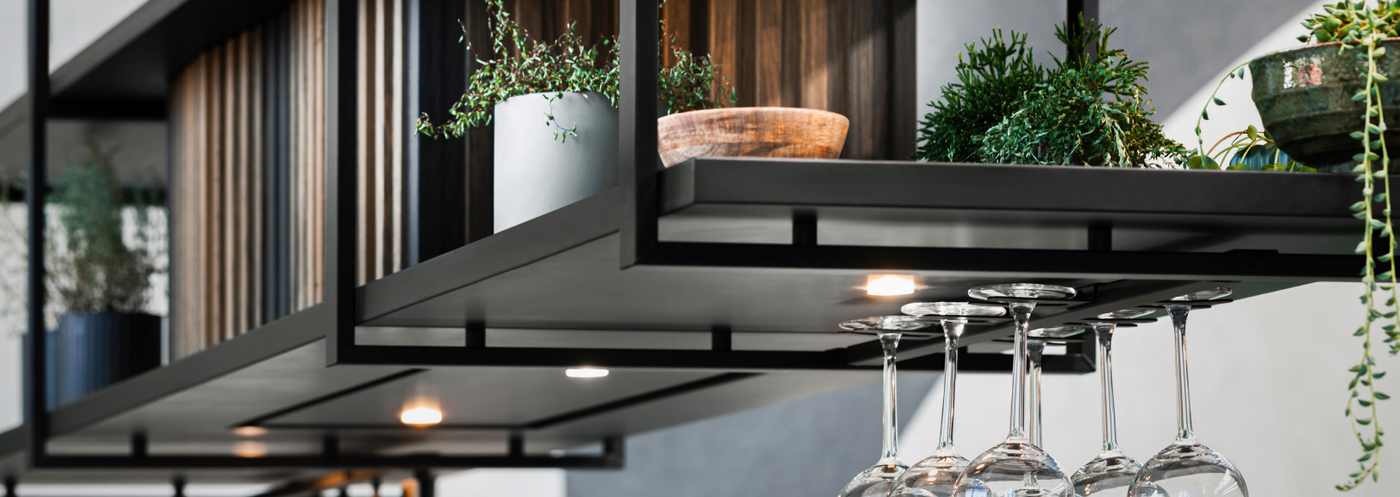
Wave 8231.101 EDGE ceiling unit 120x50 cm - stainless steel - motorless - 27 mm surface-mounted - LED
- Deze Wave EDGE 8231 plafondunit van 120 x 50 cm wordt speciaal voor jou gemaakt, in Stainless steel of in de kleur die jij kiest.
- Gratis levering in NL & BE
- Veilig betalen

Version Wave 8231.101 EDGE ceiling extractor hood 120 x 50 cm
motorless, can be combined with associated internal or external motors
fixed internal motor 850 m3/h - 58 dBA - max. 250 W - exhaust ∅150 mm
detachable, internal motor 850 m3/h - 58 dBA - max. 250 W - exhaust ∅150 mm
extra flat, internal motor 615 m3/h - 67 dBA - max. 270 W - exhaust 230 x 80 mm
remote control 3 settings & intensive & timer
grease filter(s) 2 x aluminium filter & edge extraction
lighting 3 x 4.5 W dimmable LEDs 2700 Kelvin
• center to center size LEDs: 450 mm
weight approx. 26 kg (motorless) - approx. 30 to 35 kg (internal motor)
Additional information for the Wave 8231.101 EDGE ceiling extractor hood 120 x 50 cm
optional: recirculation based on carbon filter or plasma filter
• the internal motors can be turned in 4 directions with the outlet
• only the fixed, internal motor can optionally also be installed with the drain upwards
• removable, internal motor can be used as an external channel motor
• note: supply with removable, internal motor is at the bottom; discharge at the side
• installation of tight ducts after installation of the ceiling unit with or without fixed,
internal motor is possible, using part 6000312 (see attachment channels)
• no extra charge without lighting
-
Kleur
-
Soort
-
Motor
-
Lengte
-
Breedte
-
Luchtverplaatsing
-
Geluidsniveau
-
Vermogen
-
Verlichting
-
Gewicht
Alphenberg leather in collaboration with Wave
Leather exudes strength, but at the same time has a chic and timeless look, which also looks modern. It fits effortlessly into any interior. Due to its special qualities and properties, leather is suitable for applications on furniture, doors, fireplaces and unexpected design elements, such as in the kitchen. At Alphenberg, everything revolves around the passion for leather, and we are happy to share that passion with you.
Wave works with different materials for our design elements on a daily basis, including leather. In collaboration with Alphenberg, we have developed a unique extraction unit with leather upholstery. A beautiful example of craftsmanship that offers the perfect balance between design and technology, applicable to various models. Alphenberg is the specialist in leather and high-end interior applications, and we are happy to make use of their expertise.


Do you have questions about Wave products? The WKP team is here to help.
You are most welcome in one of our showrooms to discuss with an advisor which extractor hood fits best in your kitchen interior. If you make an appointment in advance, you can be sure that there is plenty of time for you.
Kantoor WKP
Meidoornlaan 52d
4902 SC Oosterhout
T 0162 – 47 26 26
Showroom DTC
Nijverheidscentrum 2
2761 JP Zevenhuizen
* Visits by appointment only
Of course, questions can also be answered by phone. The team can be reached on workdays at 0162-472626. Or visit the Wave support page

An extractor unit can extract cooking fumes outside via a duct and a hole in the wall or roof. But increasingly, you opt for an extractor unit that filters the air and blows it back into the kitchen. The air is then recirculated. In new energy-efficient homes, you are required to work with a recirculating extractor unit, because it uses air (energy) sparingly. If you can choose and opt for recirculation, you do so for three reasons:
- The design of the extractor hood is much more elegant, as there are no large shafts.
- The extractor hood is environmentally friendly, because the warm air stays inside.
- The capacity of the extractor hood with the filters we supplied is good.
To use a recirculating extractor unit:
- Before you start cooking, set the motor to position 1 to create an air flow.
- During cooking you can increase the motor speed to position 2. Do not set it higher, because that does not benefit the filtering. The faster the air flows through the filter, the less time the filter has to purify the air.
- When you have finished cooking, let the motor run on setting 1 for a while.
- Do not turn off the engine until all food has been removed from the kitchen and the dishes have been cleared away.
There are several filters on the market that purify cooking odors. We offer two filters that guarantee that cooking odors are eliminated: a carbon filter and a plasma filter. The difference between the two is explained below.

Recirculating with Carbon
The air is passed through the filter and the carbon binds the unpleasant odours. Once the cooking odours have passed through the filter, they are largely free of oil, grease and odours and the purified air is blown back into the room. However, the absorbed oil and grease particles ensure that the filter eventually becomes clogged and the carbon does not continue to work indefinitely. This means that the filter must be replaced regularly. If you have a Wave carbon filter, it is recommended to do this after 2.5 to 3 years.
Recirculating with Plasma
The electronic plasma filter is placed on the engine exhaust nozzle and has two functions:
-
On the one hand, it removes odors using a plasma generator. As soon as the air enters the filter, a sensor detects the air flow and activates the plasma generator. Plasma eliminates odors immediately. The polluted air (grease, pollen, odors, etc.) is converted into clean air and CO₂ by a natural reaction. The recirculated clean air is then blown back into the room. Plasma changes the DNA structure of a scent, so to speak.
-
In addition to odor removal, the plasma filter also eliminates grease. Grease particles that are not retained by the grease filter are captured in the plasma filter. The walls of the filter, which are under high voltage as long as the hood is on, store the grease and eliminate it bit by bit. It is very important to leave the hood on for a while after cooking to capture the last residual odors and remove the grease in the filter. This can vary from half an hour to an hour, depending on your cooking habits. By running the hood after cooking, you prevent the filter from becoming saturated and odors from passing through the plasma filter. With normal use, this filter can last about 12 to 15 years without maintenance. Thanks to the conical interior, there is almost no resistance and the filter even has a sound-absorbing effect.
Recirculatie of afvoer? Zo houd je de keukenlucht schoon én de warmte binnen
De Wave 8231.101 EDGE ceiling unit 120x50 cm - stainless steel - motorless - 27 mm surface-mounted - LED werkt op recirculatie: de lucht wordt boven je kookplaat gefilterd en gaat schoon de keuken weer in. Geen gat in de gevel, geen kanaal door het plafond, en de warmte waarvoor je betaalt blijft in huis.
- ± 400 kWhwarmte die een afvoerkap per stookseizoen naar buiten blaast (rekenvoorbeeld hieronder)
- 21 dm³/swettelijke minimale ventilatie voor een keuken, geregeld via de ventilatie van je woning
- 2040uiterlijk jaar waarin de EU fossiele cv-ketels wil uitfaseren; koken en verwarmen gaan elektrisch
Warmteverlies: wat kost een afvoerkap eigenlijk?
Een afzuigkap met afvoer naar buiten blaast verwarmde binnenlucht weg. Die lucht moet ergens weer binnenkomen: via roosters, kieren of een open raam. In de winter is dat koude buitenlucht die je opnieuw moet verwarmen.
Rekenvoorbeeld (indicatief): een afvoerkap op 400 m³/uur, één uur per dag in het stookseizoen (± 200 dagen), bij 15 °C verschil tussen binnen en buiten. Lucht vraagt 0,34 Wh per m³ per graad.
400 × 0,34 × 15 ≈ 2 kWh per kookuur, dus ± 400 kWh per seizoen. Met een HR-ketel is dat ongeveer 45 m³ gas, ofwel zo'n € 60 per jaar bij een gemiddelde gasprijs van € 1,37 per m³. Met een warmtepomp kost dezelfde warmte minder stroom, maar de tocht en de onderdruk blijven.
Dat bedrag lijkt bescheiden, maar het is niet het hele verhaal. In goed geïsoleerde, luchtdichte woningen kan een krachtige afvoerkap onderdruk veroorzaken. Dan werkt je ventilatiesysteem minder goed, ontstaat er tocht en is soms een extra luchttoevoer nodig. Recirculatie heeft daar geen last van: er gaat geen lucht naar buiten, dus er hoeft ook niets naar binnen.
Waarom recirculatie steeds vaker de slimme keuze is
- Warmte blijft binnen. Geen verwarmde lucht naar buiten, geen koude lucht die ervoor terugkomt.
- Vrij te plaatsen. Ideaal boven een kookeiland, in een appartement waar de VvE geen gevelgat toestaat, of bij een verbouwing zonder ruimte voor kanalen.
- Past bij koken op inductie. Nieuwbouw krijgt sinds 1 juli 2018 in principe geen gasaansluiting meer. Bij inductie komen er geen verbrandingsgassen vrij; de kap hoeft vooral vet, geur en kookdamp aan te pakken, en daar is een goede recirculatiekap voor gemaakt.
- Werkt samen met je woningventilatie. Mechanische ventilatie of balansventilatie met warmteterugwinning voert vocht en CO₂ af; de kap vangt vet en geur bij de bron, zonder de luchtbalans te verstoren.
- Weinig onderhoud met een plasmafilter. Volgens de fabrikant gaat een plasmafilter 12 tot 15 jaar mee en hoeft hij niet vervangen te worden. Bekijk de recirculatiefilters en accessoires.
Van het gas af: in Nederland, Europa en wereldwijd
Koken en verwarmen zonder aardgas is geen trend meer, maar beleid. Op de klimaattop COP28 (december 2023) spraken bijna 200 landen af om over te stappen van fossiele brandstoffen in hun energiesystemen. De Europese Unie geeft sinds 1 januari 2025 geen subsidie meer voor losse fossiele cv-ketels en wil die volgens de herziene gebouwenrichtlijn (EPBD) uiterlijk in 2040 helemaal uitfaseren.
Nederland gaat dezelfde kant op. Nieuwbouw krijgt sinds 2018 in principe geen gasaansluiting meer, het Groningenveld blijft dicht en het kabinet wil de (hybride) warmtepomp vanaf 2029 de norm maken waar een warmtenet niet geschikt is. Steeds meer huishoudens stappen daarom over op inductie en een warmtepomp. In zo'n all-electric huis is elke kuub verwarmde lucht extra waardevol, en dat maakt een recirculatiekap de logische partner: geen verbrandingsgassen om af te voeren, en de warmte blijft binnen.
Afzuigen bij de bron werkt het best
Bij bakken en braden komt veel fijnstof vrij. TNO mat in Nederlandse woningen pieken van 100 tot bijna 2.000 µg/m³ PM2,5. Een afzuigkap die de kookdampen direct boven de pan opvangt, is veel effectiever dan alleen de hele keuken ventileren. Zet de kap daarom altijd aan zodra je begint met koken, en laat hem na afloop nog 10 tot 15 minuten draaien.
Wat zegt de wet over ventilatie in de keuken?
Volgens het Besluit bouwwerken leefomgeving (Bbl) geldt voor een ruimte met een kookplaats in nieuwbouw een minimale ventilatiecapaciteit van 21 dm³/s (ongeveer 75 m³/uur), af te voeren naar buiten. Die eis wordt in de praktijk ingevuld door de ventilatie van de woning, zoals het afzuigpunt van de mechanische ventilatie in de keuken, en niet door de afzuigkap.
Een recirculatiekap is dus prima mogelijk zolang je woningventilatie op orde is. Voor bestaande woningen geldt het niveau waarmee de woning destijds is gebouwd. Twijfel je over jouw situatie? Vraag het je installateur of aannemer, of neem contact met ons op.
Ik kook op gas. Is recirculatie dan ook geschikt?
Eerlijk advies: bij koken op gas is afvoer naar buiten de betere keuze. Een gasvlam produceert stikstofdioxide (NO₂) en andere verbrandingsgassen, en die worden door recirculatiefilters maar beperkt tegengehouden. TNO zag de NO₂-reductie van een koolstoffilter binnen enkele weken dalen van ongeveer 60% naar 20%.
Uit Europees onderzoek dat de NOS in oktober 2024 aanhaalde, overlijden in Nederland jaarlijks naar schatting zo'n 1.300 mensen eerder door stoffen die vrijkomen bij koken op gas. Overweeg je de overstap naar inductie, dan is recirculatie een logische keuze. Blijf je op gas koken, dan helpen we je graag met een kap met afvoer of een externe motor.
Haalt een recirculatiekap ook vocht weg?
Gedeeltelijk. Een recirculatiekap vangt vet, geur en een deel van de kookdamp op, maar vocht verdwijnt niet uit huis. Dat is de taak van de woningventilatie. Zet je mechanische ventilatie tijdens het koken in een hogere stand en gebruik pannen met een deksel; dan blijft het vochtniveau in de keuken goed.
Plasmafilter of koolstoffilter?
Een koolstoffilter is goedkoper in aanschaf, maar raakt na ongeveer drie jaar verzadigd en moet dan vervangen worden. Een plasmafilter kost meer, maar gaat volgens de fabrikant 12 tot 15 jaar mee en vraagt weinig onderhoud. Over de hele levensduur is een plasmafilter daardoor vaak de voordeligste en meest duurzame keuze.
Tips voor schone keukenlucht
- Zet de kap aan vóór je begint, ook als je alleen water kookt.
- Laat de kap na het koken nog 10 tot 15 minuten nadraaien.
- Kook zoveel mogelijk op de achterste zones en gebruik een deksel.
- Zet de woningventilatie tijdens het koken in een hogere stand.
- Maak het vetfilter regelmatig schoon en houd de filters in goede staat.
Bronnen · bijgewerkt oktober 2026
- IPLO: Ventilatie, regels bij nieuwbouw (Bbl art. 4.122 en 4.128)
- TNO (Jacobs, 2018): ventilatiesysteem en luchtkwaliteit bij koken
- Rijksoverheid (6 dec 2024): EU stopt subsidies voor fossiele cv-ketels
- eceee: EU-akkoord uitfasering fossiele ketels in 2040 (EPBD)
- Solar Magazine (30 jan 2026): coalitieakkoord, normering warmtepomp vanaf 2029
- NOS (28 okt 2024): koken op gas en gezondheid
- Gasprijs: gemiddelde consumentenprijs 2026 incl. belastingen (± € 1,37/m³); jouw tarief kan afwijken.
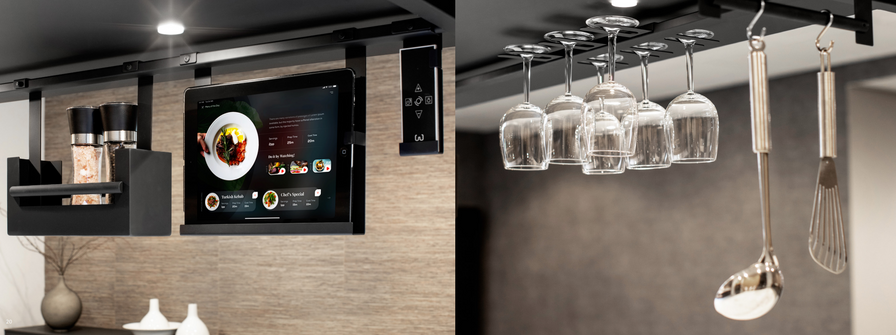
Bestel hier meteen accessoires voor je frame